
Why Buy a Porsche When a Mustang Is Pretty Damn Fast?
Let's get something out of the way:
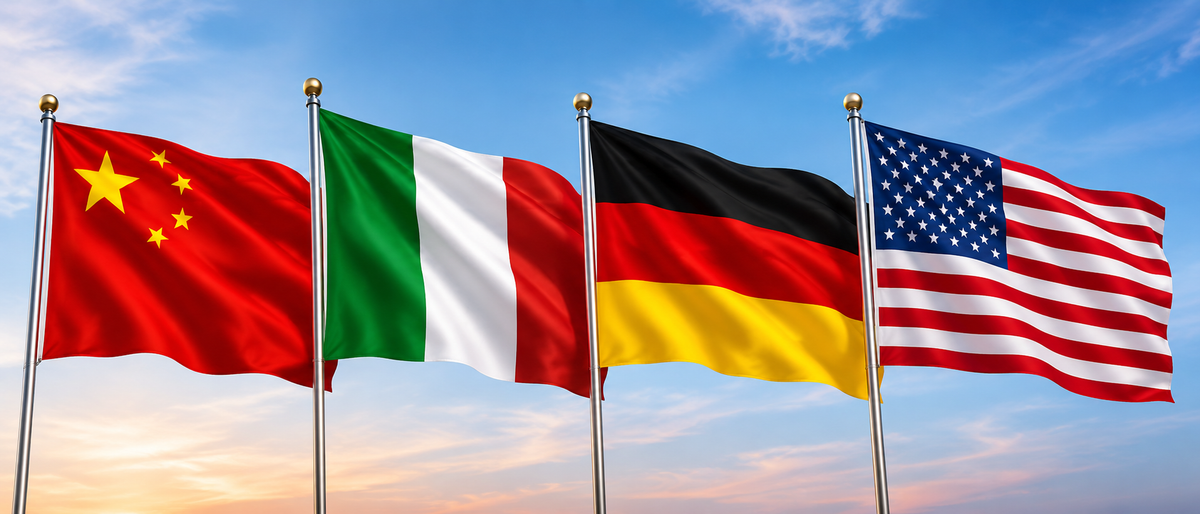
The Chinese are making some damn good bicycles.
QuickPro, Tavelo, X-Lab, and a growing list of other manufacturers are producing carbon frames that are lightweight, aerodynamic, attractive, and, in many cases, exceptionally well-made.
We're not going to insult your intelligence by pretending otherwise.
The days of dismissing Chinese bicycle brands as cheap knockoffs are largely behind us. Some of these companies have serious engineering capabilities, sophisticated manufacturing processes, and products that can absolutely hang with the established players.
And the prices? Pretty compelling.
So why would someone spend thousands more on a Cervélo, Factor, ENVE, Colnago, or Scott?
We're glad you asked.
Let's Talk About Cars for a Minute.
A Ford Mustang GT is a seriously fast car. So is a Chevrolet Corvette. And Kia and Hyundai have demonstrated that you can get a tremendous amount of performance and technology without spending luxury-car money.
Yet somehow, Porsche continues to sell 911s. Lexus has no shortage of customers. And McLaren manages to convince people to spend several hundred thousand dollars on cars that won't necessarily get them to the grocery store any faster than a Mustang.
Are all these people idiots?
Well, statistically, probably a few.
But most understand something that gets lost in the endless internet arguments about bicycle weight, wind-tunnel numbers, and dollars per gram.
Performance is only part of the equation.
There's engineering, refinement, design, ownership experience, brand history, dealer support, resale value, and the confidence that comes from buying a product backed by an established organization.
And yes, there's also the simple pleasure of owning something special.
Nobody buying a McLaren is doing a spreadsheet analysis of horsepower per dollar and declaring victory.
They're buying the whole damn thing.
A Carbon Frame Is Not the Entire Product.
Here's where we think the bicycle industry gets a little confused.
A frame can be manufactured beautifully, test impressively, and perform exceptionally well on the road.
That doesn't automatically make the company behind it equivalent to Specialized, Cervélo, Scott, Factor, ENVE, Colnago, or Pinarello.
Those brands have invested years, sometimes decades, building engineering programs, developing products, supporting dealers, establishing distribution networks, and creating the infrastructure necessary to stand behind what they sell.
You're not just paying for carbon fiber and a fancy paint job.
You're paying for everything surrounding that frame.
Does that mean every established brand makes a better bicycle than every newer Chinese competitor?
Absolutely not.
But it does mean there are meaningful differences in what you're purchasing.
Here's the Part Nobody Likes to Think About.
What happens when something goes wrong?
We don't mean a squeaky bottom bracket or a seatpost that slips every third ride.
We mean something serious: A structural failure. An accident. An injury. A product liability issue.
Carbon bicycles are remarkable machines, but they're also structural products that we trust with our lives while descending mountains at 50 mph or hammering through a group ride at 30 mph.
That's not the moment you want to discover that the company behind your bicycle is difficult to reach, has limited resources, or operates in a jurisdiction where pursuing a legal remedy could be substantially more complicated.
This is one of the less glamorous reasons we value established brands with meaningful operations and accountability in the United States.
Not because an American office magically prevents product failures. It doesn't.
And not because every company without one makes an inferior product. That's nonsense.
But having a clearly identifiable U.S. business presence, an established warranty process, a reliable dealer network, and a company with the resources and incentive to resolve serious problems matters.
A warranty is a promise.
The organization standing behind that promise is what gives it value.
And if an accident results in a legitimate product liability claim, knowing who is legally responsible, where that company operates, and whether a judgment could realistically be enforced can become a very big deal.
Suddenly, saving $2,000 on the frameset doesn't seem like the only important consideration.
The Internet Loves a Bargain. Reality Loves a Support Network.
We've all seen the YouTube videos.
"This $2,000 Chinese Frame Is Just as Fast as a $6,000 Superbike!"
Probably is. In fact, we'd be surprised if some of them weren't.
But here's a question that rarely makes it into the thumbnail:
What happens three years from now when you need a proprietary headset component, replacement seatpost hardware, a derailleur hanger, or some obscure little piece that brings your entire bicycle to a halt?
Who has it? Where is it? How quickly can you get it?
And who's going to help you figure out which part you actually need?
Established manufacturers aren't perfect. Trust us. We've spent enough time on hold with bicycle companies to know that.
But meaningful parts distribution, trained dealers, technical documentation, and manufacturer relationships can make the difference between having your bike back on the road next week and spending the next month exchanging emails with someone 12 time zones away.
To be fair, some of the newer Chinese brands are investing in U.S. warehouses, dealers, and support systems themselves. Good for them. That's exactly what serious competitors should be doing.
And as those networks mature, the value proposition gets stronger.
But those capabilities need to be evaluated, not assumed.
The Resale Conversation Nobody Wants to Have.
Let's say you've enjoyed your bicycle for three years and decide it's time for something new.
Because, naturally, the bicycle industry has discovered an entirely new way to make carbon fiber 11% stiffer and 6% more compliant.
Again.
A recognized brand with an established market, documented model history, and broad consumer familiarity generally has an advantage when it's time to sell.
That doesn't mean your expensive bicycle is an investment.
Please. It's a bicycle.
But the purchase price is only half the ownership equation.
What you can recover when you sell it matters, too.
The less expensive bicycle isn't necessarily the better value if it also proves substantially harder to resell.
And Sometimes You Just Want the Porsche.
Here's something else we don't think needs an apology.
It's perfectly reasonable to want a beautiful, premium bicycle from a company whose engineering, design, history, and philosophy you admire.
Maybe you love Cervélo's obsession with aerodynamics.
Maybe Factor's unapologetic commitment to racing speaks to you.
Maybe you're drawn to ENVE's approach to carbon engineering and custom-level refinement.
Maybe Scott's relentless pursuit of lightweight performance gets you excited.
Or maybe there's just something about the history and Italian pedigree of a Colnago that makes you smile every time you walk into the garage.
You don't need to justify any of that with a wind-tunnel chart.
Nobody asks a Porsche owner to prove that a Mustang wouldn't have gotten them to work just as quickly.
At least nobody they'd particularly enjoy having dinner with.
So, Should You Buy a Chinese Bike?
Maybe.
If you understand what you're buying, are comfortable with the support structure, and value maximum performance per dollar, there are some very compelling options.
We're not here to pretend otherwise.
And we certainly aren't going to tell you that owning a QuickPro instead of a Cervélo somehow makes you less of a cyclist.
That's ridiculous.
But if you're spending serious money on a bicycle, we think it's worth looking beyond frame weight, aerodynamic claims, component specifications, and the checkout price.
Consider the company. The engineering history. The dealer network. The parts availability. The warranty process. The legal accountability. And the experience of owning the thing five years from now.
Because the best value isn't always the lowest price. And the fastest bicycle isn't necessarily the best bicycle to own.
At Winter Park Cycles, we've chosen to work with brands we believe deliver more than just a competitive frameset.
We believe in the products, the people behind them, and the relationships that help us take care of our customers long after the credit card has cleared.
Are they more expensive? Sometimes, yes.
Are they worth it? We certainly think so.
But then again, nobody ever bought a McLaren because it was the sensible financial decision.
And thank God for that.
Winter Park Cycles — We Sell Really Good Bikes. And We Have Opinions About Them.


Leave a comment
This site is protected by hCaptcha and the hCaptcha Privacy Policy and Terms of Service apply.